
From free walking tours to paid walking tours, just like the rest of the world, walking tours in Australia are growing more and more popular. They are a great way to see the city you are visiting (or from) with a knowledgeable guide that will give you great insights in the city or area, its history and culture.
In this guide we will go through what is a walking tour, why we, Sustainaroo Travels, recommend walking tours in Australia, whether you are exploring your home town or travelling around. Then we will go through all the different types of walking tours in Australia including their typical prices, what to expect for tours and where and how you would find the type of walking tour you were looking for, as well as various FAQS.
What is a ‘Walking Tour’?
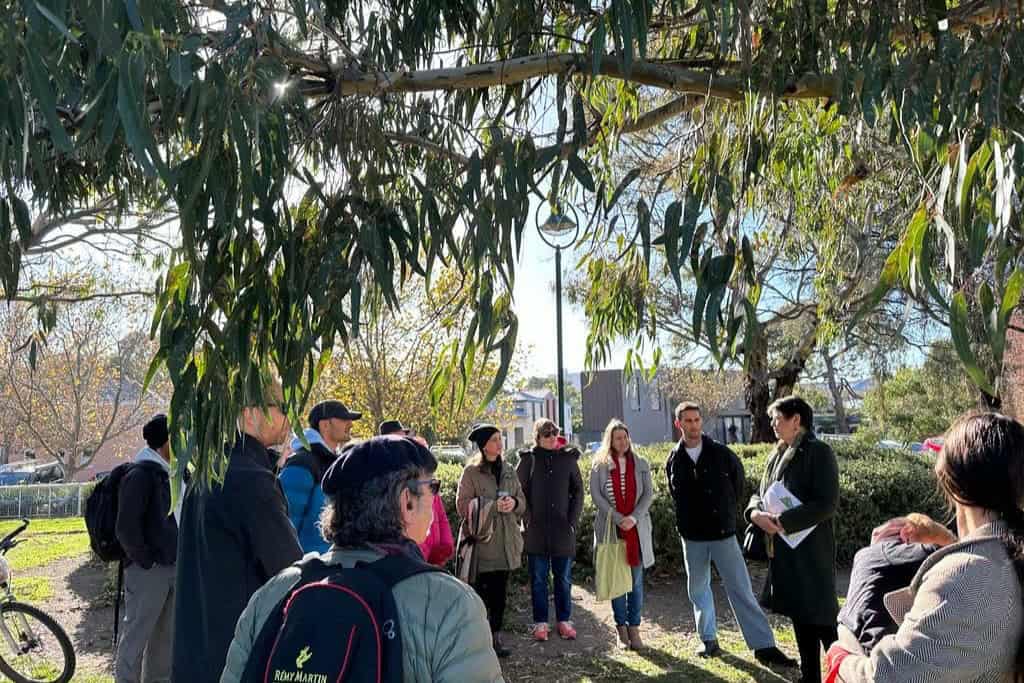
If you are wondering what is a walking tour, you may be seeing that there are a lot of different answers out there. When doing our research about what other articles and information there was on the worldwide web about walking tours in Australia, all we found were multi day $3,000 hiking (or ‘walking’) tours around Australia aka ‘Walking Holidays’, but nothing about actual walking tours in Australia! So we thought we would explain what a walking tour actually is.
So what is a walking tour? Walking Tours are tours that are predominantly conducted by foot, with some public transport occasionally included. They are generally 1-3 hours in length, but you can find some full day walking tours with a big focus on education or insight in an area whether that be cultural, historical or of current happenings.
When walking tours in Australia become multi-day, that is when they are more accurately called hiking tours or simply multi-day trips, which is what predominantly pops up on searching the term ‘Walking Tours in Australia’ and although you do walk on those, they are not really ‘Walking Tours’. So if you are interested in walking tours in Australia, then you have come to the right place! If you are however interested in guided walking holidays in Australia, multi-day trips or hiking tours, click here to have a read of what’s out there.
Walking Tours Encompass the Sustainable Tourism Principles
Walking tours in Australia are not only a great way to see and get to know a place on foot, it is the most sustainable way to be a tourist wherever you are and you can even do them in your own city or town!
Socio-Economic Impact: Walking tours in Australia are often run by small businesses, local councils or run by local individuals with the money (if it costs) going to the individual or towards supporting the local community or historic/cultural site or organisation.
Environmental Impact: The environmental impact of walking tours in Australia is very low due to no cars or tour buses, just occasional public transport on some tours. One thing to take into consideration might be that in some walking tours they may offer takeaway coffees and food with single use items, or the tours might be visiting or conducted within businesses that may not be environmentally conscious. However walking tours as a concept still have a far less environmental impact than most other tour types.
Cultural Impact: Just like the socio-economic impact, the cultural impact of walking tours in Australia can vary depending on the type of tour, but a walking tour is an opportunity for people to showcase all aspects of their town and their history, with the proceeds going back into the local community. You can also find more and more walking tours that support and educate you about the First Nation’s Peoples and Australia’s full history which is very important to sustainable travel and a better future, not to mention so interesting!
Types of Walking Tours in Australia
When considering types of walking tours in Australia, it is helpful to understand the different styles. When having a read about different types of walking tours in Australia, it is also important to note that some walking tours might fit into multiple categories. We will explain this in detail below.

1. Free Walking Tours: Plus Tips
Free Walking Tours (plus tips) are a global phenomena and recent style of tour that was said to have started in Berlin in 2004, but is now in most cities around the world including many cities in Australia. These are walking tours where you mainly walk, sometimes take public transportation and are run by knowledgeable locals who take you to various parts of the cities, so you get to know the real city, its history and culture. Many of these tour guides are students or recent graduates of university with an interest in history or culture giving value usually beyond the standard local.
When people usually talk about ‘free walking tours’, this is generally what they mean, and will be the most common type of walking tours in Australia that you will find. If you are interested in Completely Free Walking Tours though we cover that next.
Price: As the name suggests, this type of walking tour is ‘free’ plus a tip. So, when you find a walking tour you like in a city, ensure you make a (free) reservation, so that you are not turned away due to capacity limits or no walk-in company policies and check on their site if you need to have cash for the tip.
At the end of the tour, the tour guide will ask everyone to give a tip depending on how much you feel it was worth, but please be as considerate and compassionate as you can with your tips, as this is a job for them.
How much to pay for free walking tours?
You might be wondering how much to pay for free walking tours, and the answer really depends on the country you are in. Some companies might give you a guideline for a tour, but most do not, as they do not want to bias you into a price, but this can be intimidating for many people. Paid walking tours in Australia can vary from $20-50, so keep that in mind depending on your budget and how good you find the tour guide and the tour on the day. But do remember that the tip you leave is what the guide takes home and in the economy in Australia we all know how expensive things are for us and the guides.
What Can be Included: Free Walking Tours (plus tips) usually start in a location and you walk around the city or town, seeing great locations, while hearing interesting knowledge from the local guide. Some may get you to take public transportation as well, but this will be at your own cost. But being free plus a tip, there is rarely anything else included except for the tour itself, although sometimes you might get a discount drink at a bar, cafe or restaurant at the end location.
Where to Find: These tours can be found in most cities around the world these days. Free walking tours in Australia (plus tip) are available in all the capital cities, as well as other tourist towns. Simply go to your search engine and look up: ‘free walking tours in {insert city/town}.
Sustainability: Walking tours in Australia are a highly sustainable way to explore a city, as it prioritises slow, low-impact travel and reduces reliance on cars, buses, or other transport. By travelling on foot, participants minimise emissions while engaging more deeply with their surroundings, local culture, and community. The tip-based model also supports local guides directly, encouraging meaningful, local human connection rather than mass tourism.
Examples:
2. Completely Free Walking Tours
If you are looking for FREE walking tours, no expectation for money, absolutely free tours, there are still many around and the beauty of them is, that they are often very unique. The difficulty is that with free walking tours, that require a tip, having become extremely popular it can sometimes be hard to find really free tours, unless you know what you are looking for.
Completely free walking tours in Australia are run and funded by groups or organisations that want you to come and visit, for example councils, charities, museums, galleries, cultural organisations, botanical gardens and other community led groups. These organisations will sometimes have both a free and a paid tour, so choose the one that works for you. You can also find a lot of self guided walking tours, which we will talk more about in the later section.
Guides are typically volunteers or paid staff whose role is to educate and connect people with the local area rather than to earn tips or any money. The pace is generally relaxed and inclusive, with a focus on learning, accessibility, and community engagement. Free walking tours in Australia are often community run, which we go into later in number 4: Sustainability and Community Focused Walking Tours.
Price: Free, free, free. Completely free!… Although some may ask for a donation to help support the organisation or community, or have a donation box available (this is optional).
What Can be Included: Completely free walking tours in Australia run by organisations can include a wide range of experiences, depending on who is running them and their purpose. Many include guided walks led by volunteers, council staff, or community educators who share local history, culture, architecture, nature, or sustainability stories along the way. Some tours may focus on specific themes, such as Indigenous history, street art, heritage buildings, community gardens, or environmental initiatives. Others might include visits to public spaces, parks, landmarks, or community projects, with opportunities to ask questions and engage in conversation rather than following a fixed script.
Where to Find: They are often advertised through websites, Eventbrite, libraries, visitor centres, or community noticeboards, and may require booking or operate on a first-come, first-served basis. Some free walking tours in Australia may also not be specifically called walking tours or found when you search for ‘free walking tour {insert city/town}’ due to being a small community run tour and not having their SEO (searchability) optimised.
They may just have “free tour” somewhere on their website or a sign up in their window. They also may be more aimed at locals and not always advertised on “tourist” websites, so you may need to look at events from the local council, or pages from local homesteads, galleries, local places to visit, or community organisations.
Sustainability: Completely free walking tours in Australia run by organisations are also a very sustainable way to explore a city, as they encourage people to move slowly and experience a place on foot rather than relying on transport with a higher environmental impact. Because they are usually community or council run, they often focus on education, local history, and connection to place rather than commercial tourism, which can help foster greater appreciation for culture and environment.
Examples:
McClelland Gallery Free Guided Tour
State Library of Victoria Free History of the Library Tour
National Library of Australia (Canberra) Tours
Royal Botanic Gardens Victoria Free Guided Walk
Free Public Tour of Parliament House (Canberra)
3. Paid Walking Tours
Traditional paid walking tours in Australia are tours that are conducted by various businesses, organisations and individuals, and you are charged a set price.
Paid walking tours in Australia are guided experiences run by businesses, organisations, or independent guides, where participants pay a set fee to join. These tours often focus on local history, culture, food, nature, or landmarks, and can range from general city introductions to niche experiences such as ghost tours, street art walks, or sustainability-focused tours. They are typically designed for visitors, but can also appeal to locals wanting to explore their area from a new perspective.
Price: Paid walking tours in Australia can start at about $25, but can go up to $200. The price will depend on location, and what is included. You will pay when you book your spot and no tip is required in Australia.
What Can be Included: Often with paid walking tours in Australia you might even get some food, drinks or souvenirs from businesses the company works with, which would be included in the price. This is clearly specified by the tour description. For any allergies you can always contact the company or guide to enquire if they can cater to your needs before booking.
Sustainability: In regards to sustainability, these types of walking tours in Australia can vary a bit, depending on what is included and how sustainable the businesses that you visited are (which is hard to know prior). However, walking is always a bonus when it comes to sustainability, and you can check on their website to see if the organiser of the tour seems to have a focus on sustainability.
Examples:
Ghosts? What Ghosts? Tour at the Old Melbourne Gaol
Royal Botanic Gardens Victoria The Explorer Bus Tour
State Library Victoria Unlocked: A Guided Tour Before the Doors Open
National Museum of Australia (Canberra) Tours
4. Sustainability & Community Focused Walking Tours
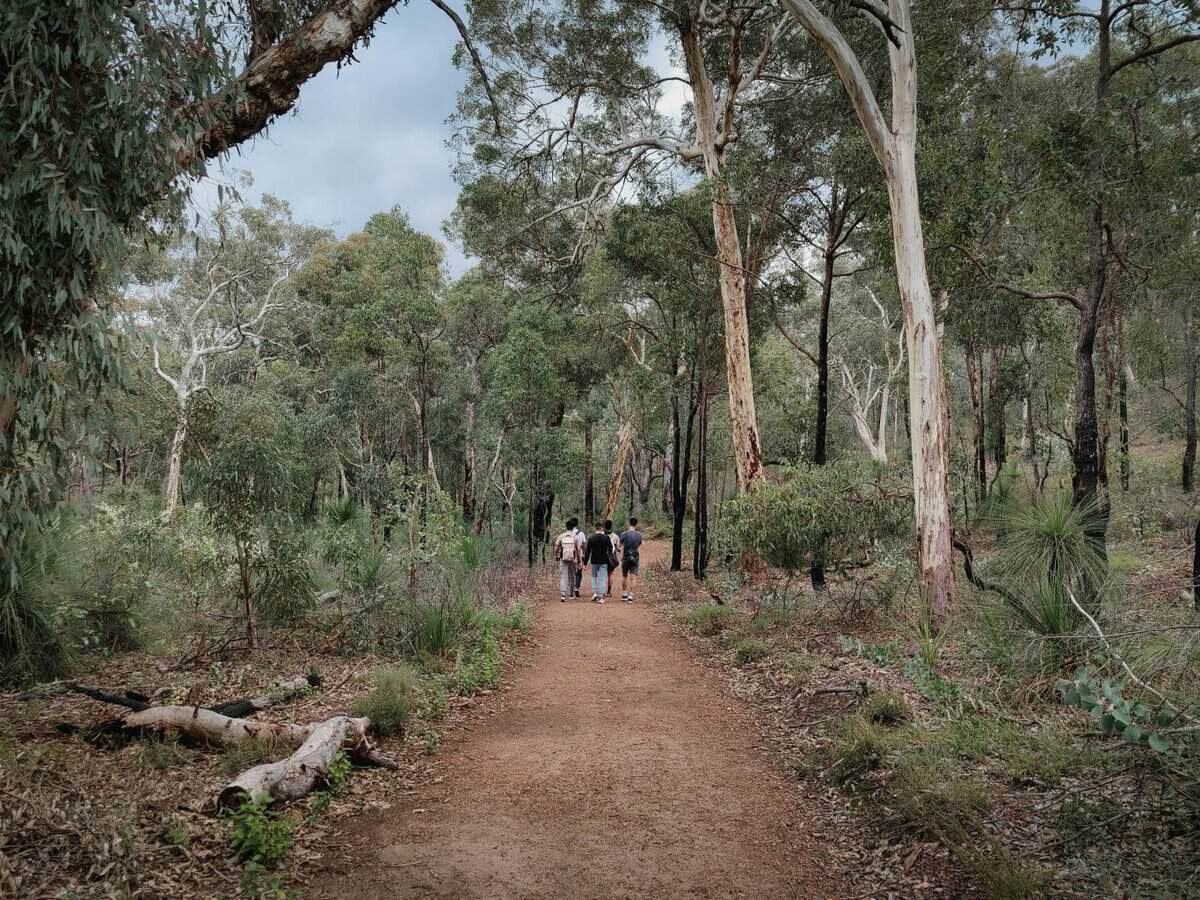
Walking tours that are run by local governments or small community organisations are one of our favourite types of walking tours in Australia, as they are less common for tourists and are designed for both locals and travellers.
Price: You can find both paid and free walking tours, but the paid ones generally are quite affordable with the money going back into the community.
What Can be Included: What can be included in sustainability or community focused walking tours in Australia depends on the organisation and local area, but they often highlight stories that connect people to place in a deeper way. This can include local history, Aboriginal heritage, public art, community gardens, sustainable businesses, environmental projects, showcasing local artists, and culturally significant landmarks.
Some tours may also feature guest speakers, visits to local initiatives, or discussions around conservation, urban sustainability, and community wellbeing. Because they are often created by people who live and work in the area, these tours can offer a more personal and meaningful perspective than standard tourist experiences.
Where to Find: These tours are often harder to find, due to being run by local councils, small communities and organisations and often don’t come up in the general ‘walking tour in {insert city}
Sustainability: Community run walking tours, or sustainability themed walking tours in Australia often have a strong sustainability focus because they go beyond sightseeing and create value for both people and place. Many include themes such as conservation, local history, and First Nations knowledge, helping participants build a deeper understanding of the environment and cultural significance of an area. They also often support small organisations, grassroots initiatives, and unique projects.
Examples:
List of Free Tours of Iconic Melbourne Places
Royal Botanic Gardens Victoria ClimateWatch Free Walking Tour
Koorie Heritage Trust Birrarung Wilam Walk Public Walking Tour
Guide to Melbourne for the Climate Conscious scroll down for Sustainability Walking Tours
Lake Burley Griffin Self-Guided Walking Tour
5. Self-Guided Walking Tours: Itinerary Based
Self-guided walking tours, as the name suggests, are tours or routes that you take yourself that have no guide. You can generally do them whenever suits you and at the pace you like. There are two main styles: itinerary based walking tours which we will talk about here, and audio walking tours which we will cover in the next point. Both of these tend to give you a route to follow, highlights and information, but beyond that they can vary a lot.
Itinerary based self-guided walking tours are tours that you might find on a blog or at the local tourism information centre. These tours will usually provide a map with a route suggestion for you to take. They will have information on some landmarks or locations as recommended stops.
Depending on the guide, they may provide background on landmarks, history, local stories, or points of interest, making them a flexible option for travellers who enjoy discovering a place on their own terms. As far as walking tours in Australia go, this type of tour offers the most flexibility but it also the least interactive.
Price: Generally free, but can involve a small fee.
What Can be Included: Generally you will download an itinerary which may include a map, along with suggested stops and information about the places along the route. Depending on the guide, this can include landmarks, historical sites, public art, parks, cafés, scenic spots, or local attractions, as well as stories, cultural insights, and practical tips. Some itinerary based self-guided walking tours in Australia are simple route suggestions, while others offer detailed commentary that helps you better understand the area as you explore.
Where to Find: Self-guided walking tours with itineraries can often be found online through travel blogs, tourism websites, council websites, visitor centres, and destination guides. Some are available as downloadable PDFs, while others are shared through apps, maps, or printed brochures. Local museums, botanical gardens, heritage organisations, and community groups may also create them.
Sustainability: The tour itself has no direct carbon footprint as you are travelling on foot. You may need to get data if you are from overseas, or for anyone looking at carbon neutral internet providers check out Belong. These tours also offer flexibility, allowing people to complete only part of the route, take breaks, or combine the walk with public transport. Because they are often digital, they can be accessed without printed materials.
Examples:
What’s On Melbourne Walks and Itineraries
What’s On Melbourne Aboriginal Melbourne Walk
Lake Burley Griffin Self-Guided Walking Tour
6. Self-Guided Walking Tours: Audio Walking Tours
Traditionally, self-guided audio walking tours involved hiring a cassette player or audio device from a venue, selecting your preferred language (where applicable), and returning the equipment at the end of your visit. These days, most audio walking tours are done through your phone via apps, websites, or downloadable files.
As you walk, the audio provides commentary, stories, historical information, and directions, allowing you to explore independently while still benefiting from guided interpretation. If you don’t have mobile data, it’s a good idea to download the audio, maps, and any supporting information before you leave home. And remember to bring your headphones!
Price: Audio walking tours can be free or paid, depending on the provider.
What Can be Included: There are many ways audio walking tours in Australia can be delivered. Some use QR codes placed at specific locations, which link to audio recordings and additional information. These are commonly found in museums, botanical gardens, heritage sites, and cities. Others are hosted on websites or apps, where users can access a series of audio tracks alongside maps, images, and suggested routes. Depending on the tour, there may also be historical information, cultural stories, interactive features, and even special offers or discounts from local businesses along the way.
Where to Find: Audio walking tours can be found in a wide range of locations, including museums, botanical gardens, historic prisons, heritage sites, and cultural attractions. They may also be developed by local councils, tourism organisations, community groups, or historical sites, as well as travellers. Many are available through dedicated apps, websites, or QR codes located throughout destinations. You can try searching “audio walking tour in {insert city/town}.
Sustainability: Audio walking tours are a highly sustainable way to explore, combining the low environmental impact of walking with technology. Because they do not require a guide to be physically present, they can be accessed by many people without the additional transport, staffing, or resources needed for traditional tours. Most are delivered through a smartphone, reducing the need for printed materials and allowing information to be updated without waste.
Examples:
GPS My City Brisbane Introduction Walking Tour
Unlocked Tours (This is the free one)

FAQS
How fit do I need to be for a walking tour?
The answer will vary depending on the tour, but most tours will go for 1-3 hours and cover a variety of distances, but you will often be stopping at regular intervals while the tour guide tells you some amazing things, so you will get breaks.
Longer walking tours in Australia will often have a toilet break and a short rest somewhere to sit down, but most of the time you’ll be standing and walking, but when the guide stops to explain a certain area, you can sometimes sit down. Sometimes these could be unconventional seating spots, but luckily in Australian culture we don’t mind you sitting in most places! If you are unsure, check the tour’s information on the site or contact the company for more specific information.
Before booking, it’s worth checking the tour information for details about the distance, duration, pace, terrain, and accessibility. Some tours involve hills, stairs, uneven paths, beaches, or extended periods of standing, while others are designed to be slow paced and accessible to a wider range of abilities. If you’re unsure whether a tour is suitable for you, contact the organiser directly and they’ll usually be happy to explain what to expect and recommend the best option for your needs.
How do I find walking tours in Australia?
Walking tours in Australia are often easy to find with a simple internet search using terms such as “walking tours in {insert city or town}” like for example “walking tours in Byron Bay”. You can also check tourism websites, visitor information centres, local council websites, museums, botanical gardens, historical sites, and community organisations, many of which offer their own guided or self-guided experiences.
Specific information on where to find each type of walking tours in Australia can be found under the relevant subheading throughout this guide: Free Walking Tours: Plus Tips, Completely Free Walking Tours, Paid Walking Tours, Sustainability & Community Focused Walking Tours, Self-Guided Walking Tours: Itinerary Based and Self-Guided Walking Tours: Audio Walking Tours.
Are the tours accessible for wheelchairs and prams?
Accessibility varies depending on the tour and its location. Many walking tours in Australia take place on footpaths, boardwalks, and other accessible routes that are suitable for wheelchairs, mobility aids, and prams. However, some tours may include stairs, uneven surfaces, steep inclines, beaches, historic buildings, or narrow pathways that can make access more difficult.
If accessibility is important to you, it’s always best to check the tour information before booking. Many organisers provide details about terrain, route conditions, and accessibility features, and are often happy to answer questions or recommend suitable tours. Self-guided walking tours can sometimes offer additional flexibility, allowing participants to adapt the route to their individual needs and pace.
Are walking tours in Australia only in English?
No, many walking tours in Australia are available in multiple languages, although English is the most common. Larger tourism operators, museums, galleries, and major attractions sometimes offer tours, audio guides, or written materials in a range of languages to cater for international visitors. Some guided tours may also be available in other languages if a multilingual guide is available.
For self-guided and audio walking tours in Australia, language options are often easier to provide, with some apps and websites offering translations or recordings in several languages. If language is important to you, it’s worth checking the tour information before booking to see what options are available.
Are walking tours kid friendly?
Walking tours in Australia can absolutely be kid friendly, depending on how they are designed and paced. Family friendly tours tend to include shorter walking distances, plenty of stops, and engaging stories or activities that keep younger kids interested rather than getting overwhelmed. Tours focused on nature, wildlife, public art, or local legends can be particularly appealing for children.
Routes that are flat, accessible, and close to parks, beaches, or places to rest make it much easier for children to enjoy the experience. Many kids also love interactive elements, such as spotting landmarks, learning fun facts, or being invited to ask questions along the way.
However, some walking tours in Australia are designed primarily for adults and may cover complex historical topics, involve long periods of standing, or last several hours. If you’re planning to attend with children, it’s worth checking the recommended age range, duration, and accessibility information beforehand. Many tour organisers will be happy to advise whether a particular tour is suitable for families.

How can I be sustainable on my walking tour?
Going on a walking tour is the most sustainable way to see the city, either a city you are visiting on your travels or your own city. Overall, participating in walking tours in Australia aligns well with responsible travel, making it an environmentally and socially conscious way to experience a place.
One way to reduce your waste on these tours (and whenever you are out and about) is to BYO coffee/drink mug and food container for any leftovers and bring a reusable shopping bag for souvenirs and other things you might get (see our top 21 tips for sustainable tourism).
Are free walking tours really free?
A common question we see is, are free walking tours really free? The short answer is, unless run by a local council (eg a walking tour in the botanical gardens), which we cover above in the guide, free walking tours in Australia are usually ‘free’ plus a tip, and the tip is pretty much expected.
So, when you find a walking tour you like in a city, ensure you make a (free) reservation, so that you are not turned away due to capacity limits or no walk-in company policies and check on their site if you need to have cash for the tip. At the end of the tour, the tour guide will ask everyone to give a tip depending on how much you feel it was worth, but please be considerate and compassionate as you can with your tips, as this is a job for them.
However, some organisations do run completely free walking tours, where there is no expectation of a tip. These may be for example, a gallery that wants you to visit, and they offer a free free walking tour for visitors. We go over this more above here.
How do I prepare for my walking tour?
Before your tour, make sure you know exactly where the meeting point is and how you are going to get there. If you won’t have access to mobile internet, consider downloading directions or taking a screenshot of the meeting location in advance. It’s also a good idea to arrive a few minutes early, as most walking tours in Australia start on time and guides are often unable to wait for late arrivals.
Comfortable walking shoes are one of the most important things to bring. If the tour includes bushland, parks, or unsealed paths, closed-toe shoes are helpful. Dress for the weather and consider wearing layers, as conditions can change throughout the day.
In Australia, sun protection is important, especially on warmer days. It is recommended that you use sun protection if the UV will be over 3 that day, and you can check the UV on your weather app. For daytime tours, bring sunscreen, a hat, and sunglasses, and apply sunscreen before the tour begins.
For longer walks, a reusable water bottle is also a good idea to help you stay hydrated. Depending on the season and location, you may also want to bring a light rain jacket, insect repellent, or a small backpack for personal items. For self-guided walking tours, make sure your phone is charged and remember to bring headphones if you are doing an audio tour.
What makes a good walking tour?
A good walking tour often comes down to a combination of planning, delivery, and how well it suits your interests. Reading reviews can give you a sense of other people’s experiences, including the quality of the guide and the overall flow of the tour. Factors such as shade, pace, and how the route unfolds throughout the walk can also make a big difference to comfort and enjoyment, especially on longer tours or in warmer weather.
A knowledgeable and engaging guide is often at the heart of a great experience, helping bring stories, history, and local insights to life. It’s also important to choose a tour with a theme that aligns with your interests, whether that’s history, culture, food, nature, or art. When these elements come together, a walking tour feels more like an immersive experience than just a walk from place to place.

